Spaced out: CAKE Architecture on designing for sound
This article first appeared in Mix Interiors #246
Photography: Courtesy of CAKE Architecture
On CAKE Architecture’s bold future vision for the design of the UK’s music, club and rave circuit.
The 2016 closure of London clubbing institution Fabric was nothing short of a travesty for DnB enthusiasts nationwide. A decade on, Manchester’s House lovers are equally aggrieved with The White Hotel, set to lock its garage doors for good in January 2027. Over on the continent, the infamous Berlin Watergate (which served as a precedent to many clubs in the UK) shut at the beginning of 2024, as did Club De School in Amsterdam, itself an EDM Mecca of global renown once upon a time.
Austerity and the economic aftermath of a global pandemic haven’t been kind to our underground music scene, and artists, labels and promoters aren’t the only ones feeling the pinch. Punters who have so often found solace in thumping basslines and heaving crowds of sweaty bodies also find themselves adrift.
For London-based CAKE Architecture (founded in 2021 by friends-of-friends Hugh Scott Moncrieff and Oliver Wit), the loss of important cultural landmarks in recent years has had a palpable impact. Although the pair didn’t start out with a view to design sound-led spaces per se, a collaborative effort to realise Kingdom Festival two years prior would see them do just that.
With Scott Moncrieff in Switzerland at the time, and Wit on home ground in the UK, the design duo first collaborated in 2019 after mutual friends introduced them at the pub. Subsequent conversations with peers in hospitality design ensued and, following the delivery of SOMA (the subterranean Soho speakeasy), a connection with GALA and RALLY’s festival organisers led to the pair’s appointment as co-creative directors of Kingdom – an event that never made it off the drawing board due to lockdown restrictions.
“The site was going to be on an estate in the Midlands, not unlike Houghton in terms of how the festival sat within the landscape. It was inspired by cultural gathering spots in the continent – events like Belgium’s Horst Festival; clubs like De School in Amsterdam; Club der Visionaere in Berlin,” Scott Moncrieff reminisces. “We had partnered with labels and DJs too. Bradley Zero’s Rhythm Section [was confirmed]; Daniel Avery was going to headline one of the stages; an installation artist called Heleen Blanken who did the lighting at Trouw [a former nightclub in Amsterdam] was also involved.”
From there, the pair had set about building teams from a roster of design talent (featuring Mary Duggan Architects, Assemble and IFDO), asking each to evolve a concept from a zone-specific brief. “We wanted to explore space through sound and sound through space, and have that back-and-forth so that the audience could engage with a spatial experience that resonated on a deeper level.”
Though the festival was canned, this architect-and-artist liaison approach was applied to the studio’s future projects, including the design of the stages Visionaire (2023) and Agnes (2024) for RALLY. Scott Moncrieff is among a growing cohort rallying for a democratisation of design. “Music festivals are a great opportunity for a curious and creative mass of people, who aren’t necessarily engaged in architecture but are interested in aesthetics, music and fashion, to have their worlds opened.”
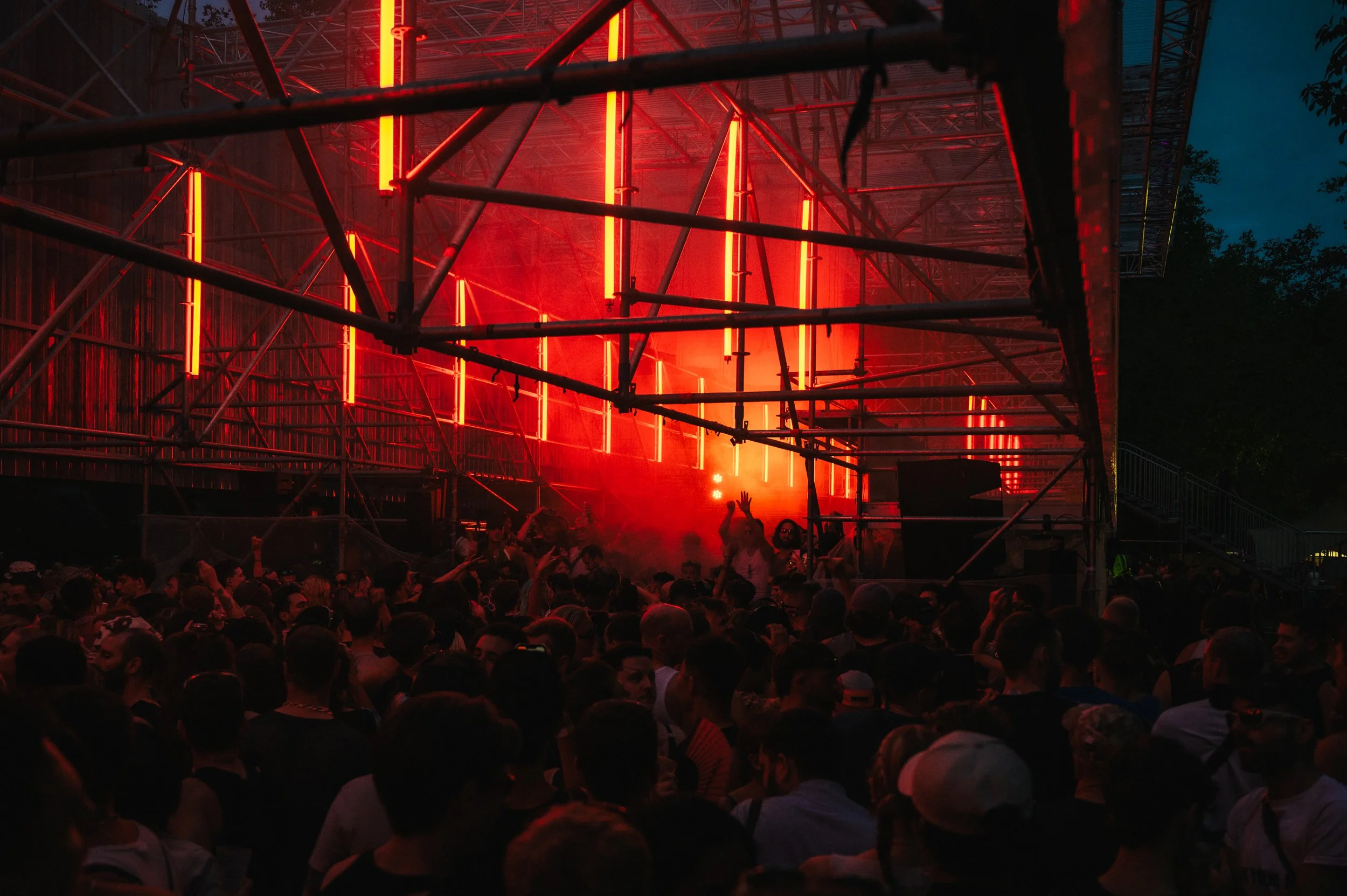
Imagined as a ‘bandstand for electronic music’ (mirroring an existing ironwork structure in Southwark Park), Visionaire, named after the legendary Berlin club, acted as an intimate pavilion for DJs at the 2023 edition of RALLY. “[We also looked at] the Neue Nationalgalerie,” says Scott Moncrieff. “We took these minimalist Miesian principles and forced them through [vignettes of] contemporary Berlin nightlife, before dropping them into a Victorian park in England. That tension is of great interest to us as a studio, reframing one lens through another to create presence.”
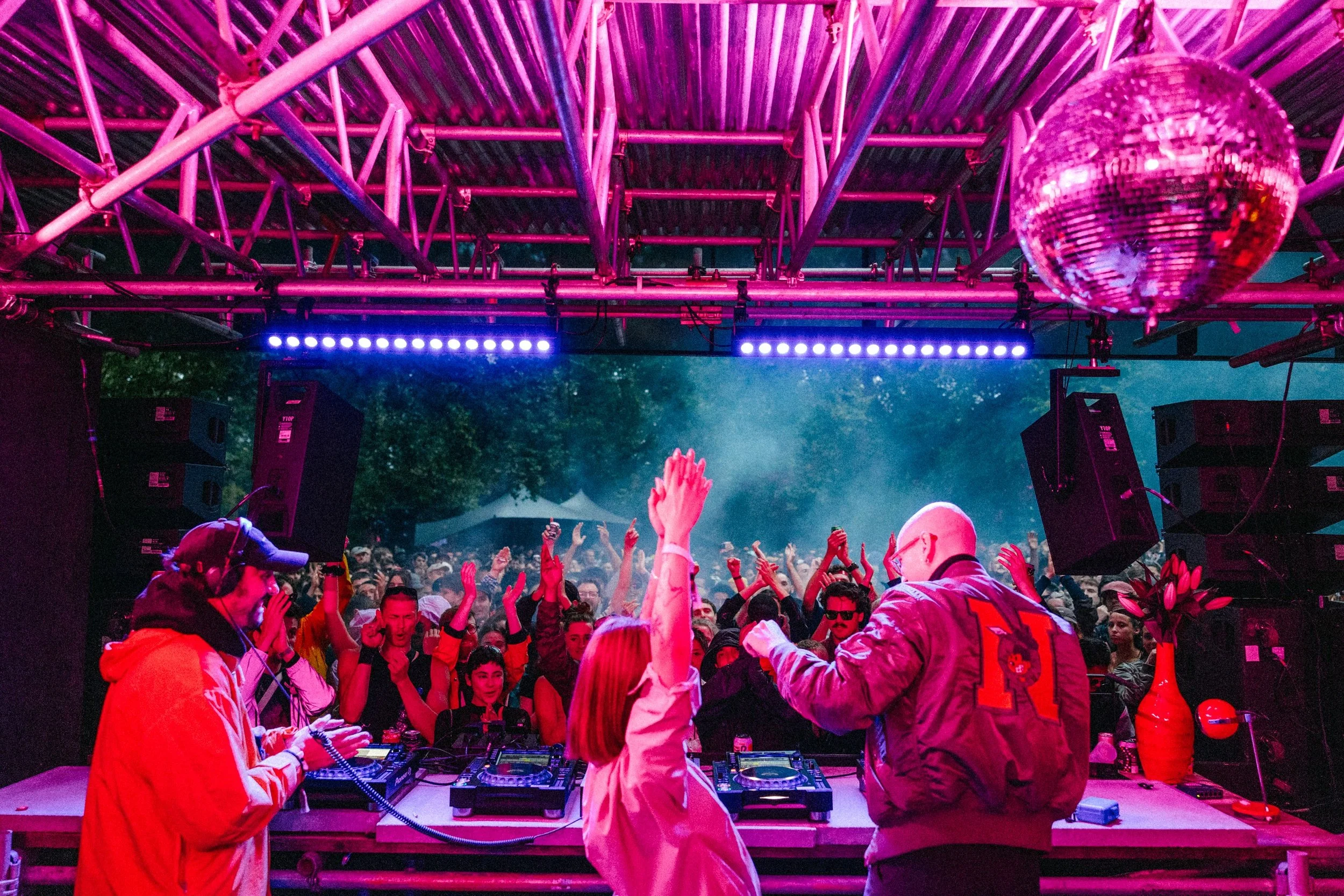
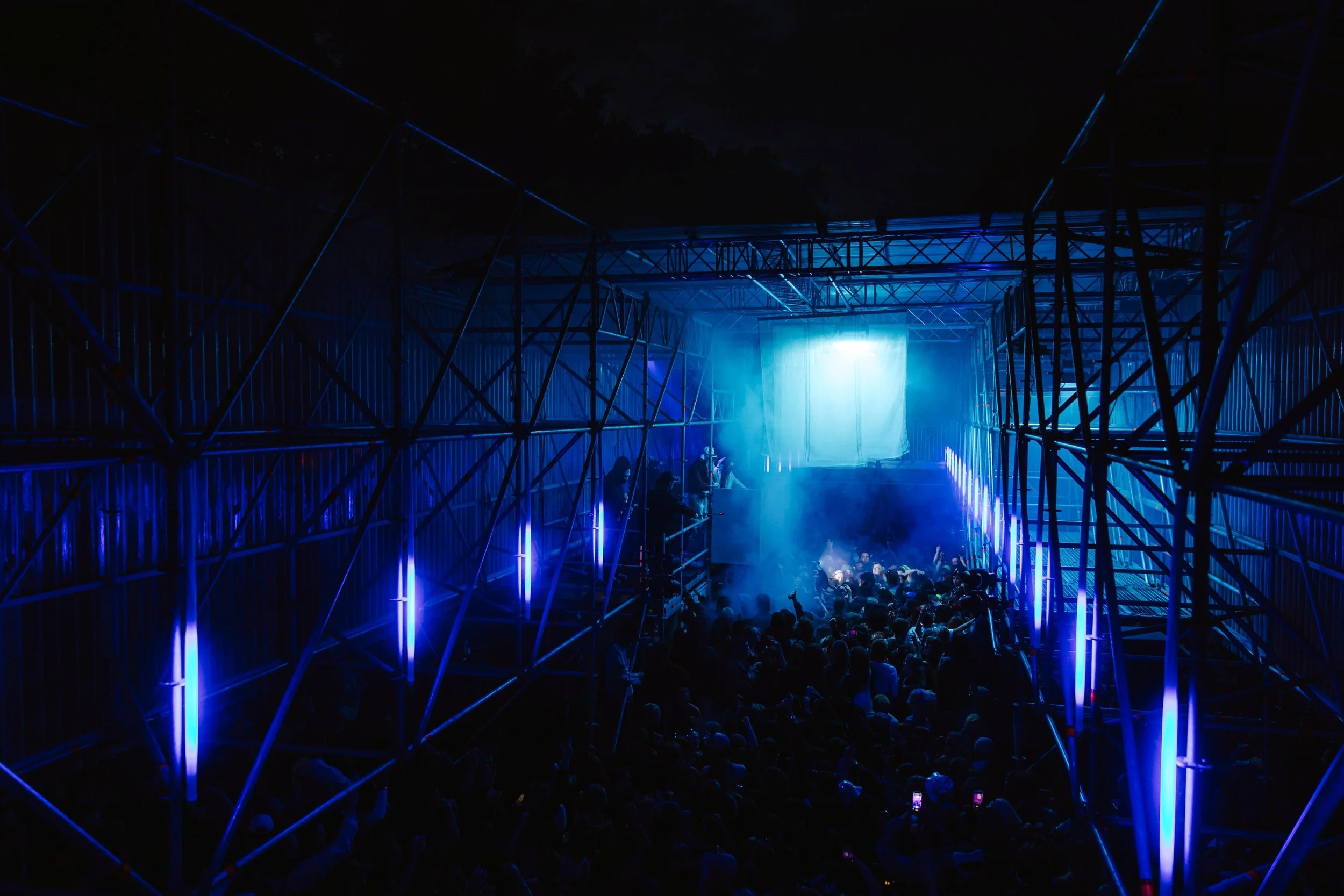
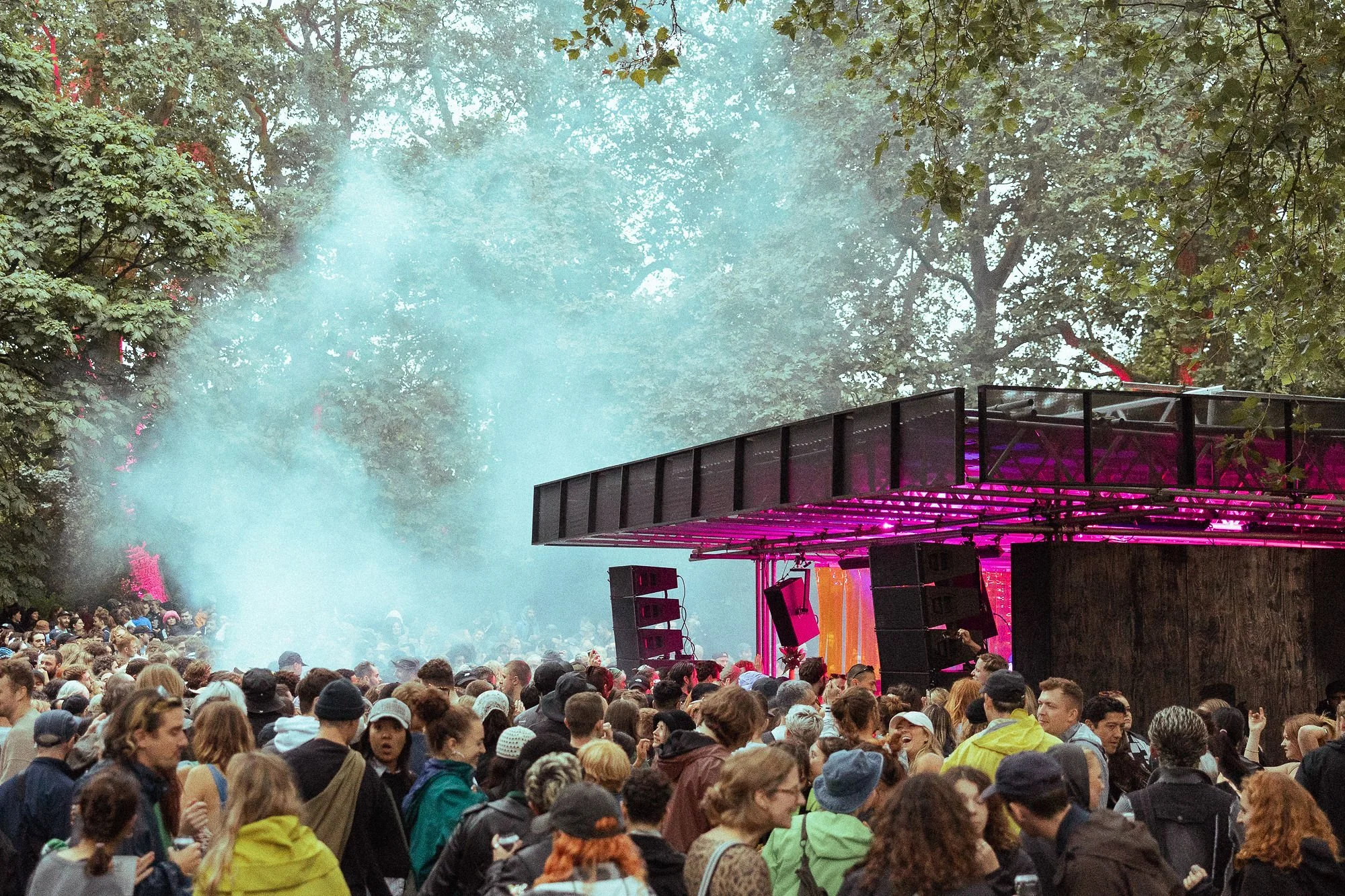
Agnes was a bigger undertaking – a dance stage-in-the-round inspired by American visual artist, Agnes Martin. Built with modular scaffolding and glass-reinforced plastic, its narrow span with raised pulpits at either end allowed views of performers from all angles, while nodding to the church architecture of nearby Dilston Gallery.
According to the bible of CAKE, narrative-led design is most effective when it’s abstracted and layered with other ideas. Like painting, a clarity of influences should be there, but not overt, allowing party goers to curate their own experience in the context of live performance.
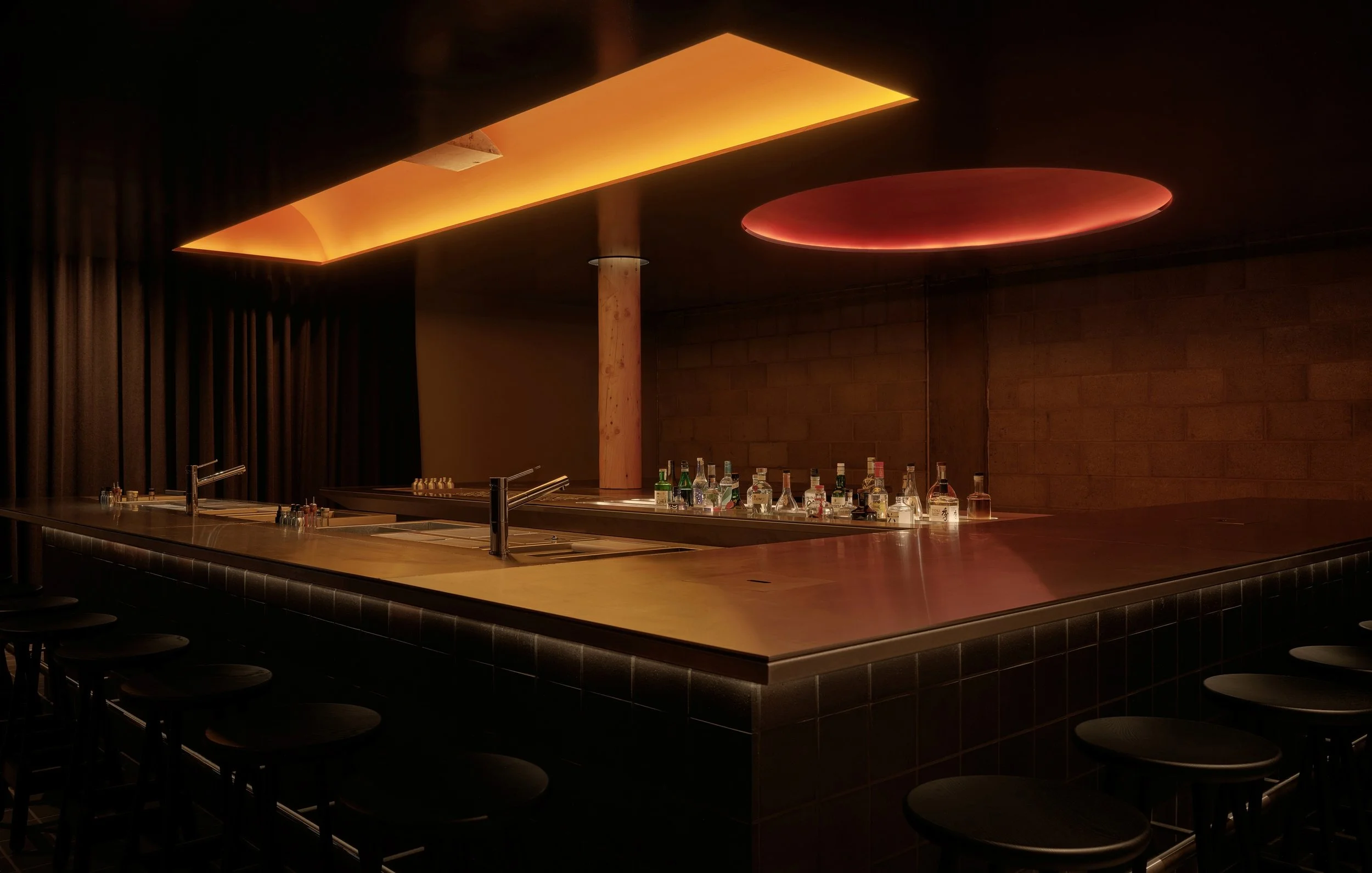
Where 360-degree access increases immersion, and subtle storytelling leaves design open to interpretation, A Bar with Shapes for a Name is just one project example where CAKE leans on ‘open-endedness’ to refocus the attention on music and atmosphere. The Hoxton venue transitions – almost imperceptibly – from a basement kitchen, into a bar, into a full-blown party environment, thus broadening the scope of its potential use. Programmatic overlap is something the team consider meticulously, the idea of self-determining interiors and not being so prescriptive, especially when it comes spaces people enjoy recreationally.
With loose layouts and subconscious linchpins, there’s certainly a liminal quality to CAKE design that seems to attract congregation – the power of liminality being something film director Paolo Sorrentino spoke on at this year’s Milan Design Week. Imbued with a cinematic ‘smoke-and-mirrors’ visual language, suspense is created before the event’s programming unfolds, allowing for the intangible (sound) to take centre stage when it eventually does.
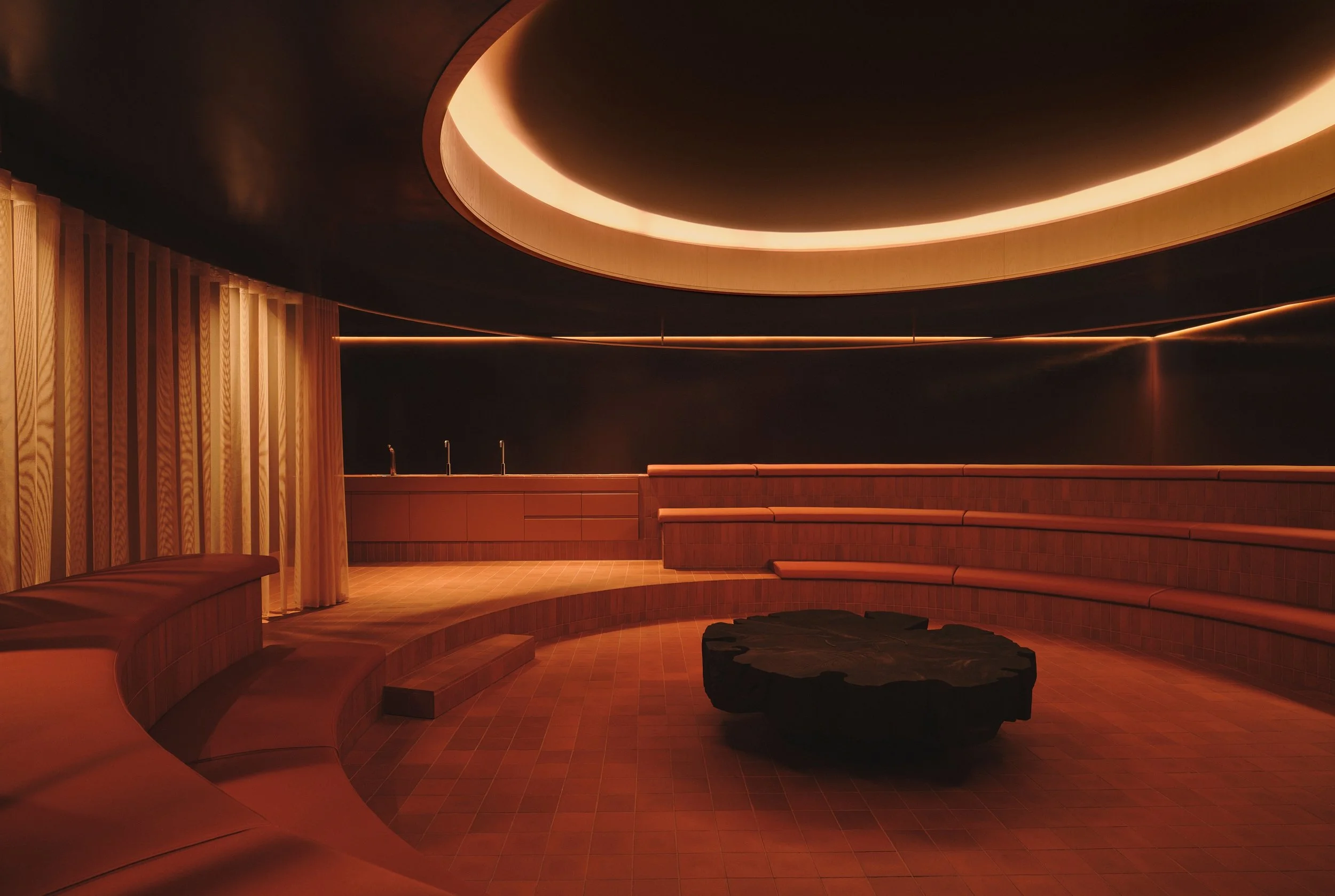
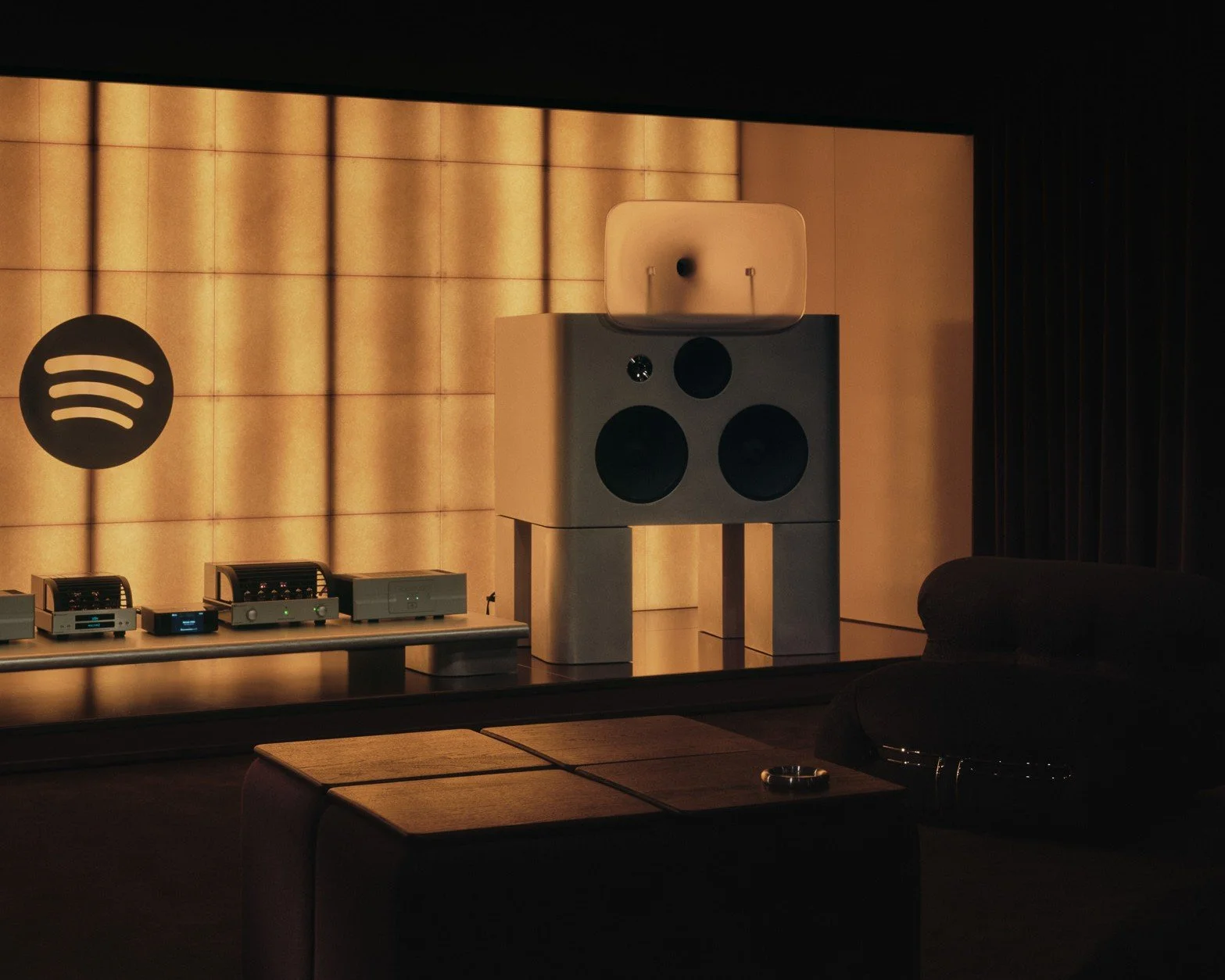
“To create immersive environments that feel singular, we offset shiny, polished materials with those that are tactile and manmade. In terms of details, we want them to fuse with the background, which comes from wanting to make a space calm because, ultimately, it’s going to be animated [by people and music].” CAKE Architect Emiliano Zavala played a pivotal role in the design of Spotify’s Drumsheds B Lounge in London. Completed in collaboration with bespoke soundsystem designers Friendly Pressure in 2023, the project was presented as a testbed for pushing the studio’s ideas around materiality.
“We made the bar out of the type of rubber matting you’d typically see on gym floors. We wrapped the entire interiors in it over soundproofing [by acoustician Ethan Bordeau] to add an industrial tactility,” Zavala explains. CAKE described the design process as an exercise in ‘essentialism,’ with hardware store materials making the project more economically viable while clearing visual noise for a fully immersive sonically-charged experience.
Since January this year, the design team (now 14 strong with a raft of regular design contributors) has been rolling out its in-house events series as a direct response to the recent glut of club closures and crackdowns on illegal raves. “It’s not exactly the moment to be building nightclubs, so this idea was born out of a conversation around the value of temporary event space,” says Scott Moncrieff. “We thought, ‘Well, we’ve got a lot of clients with a big square footage that is underutilised for long periods of time.’ If they were willing to lend it to us for a night, or a weekend, we could – through some low intervention design – transform the quality of the space and create something which is, yes, focused around music, but also pushing against what a club typically is.”
“This happens a lot in cities such as Brussels.” CAKE’s co-founder again looks to mainland Europe for inspiration. “The city has these government-funded organisations that broker property between artists and developers, so spaces that are sat empty [before development] can be utilised by musicians, or anyone looking to establish any kind of cultural production. It really has that engrained in its institutional ecosystem.”
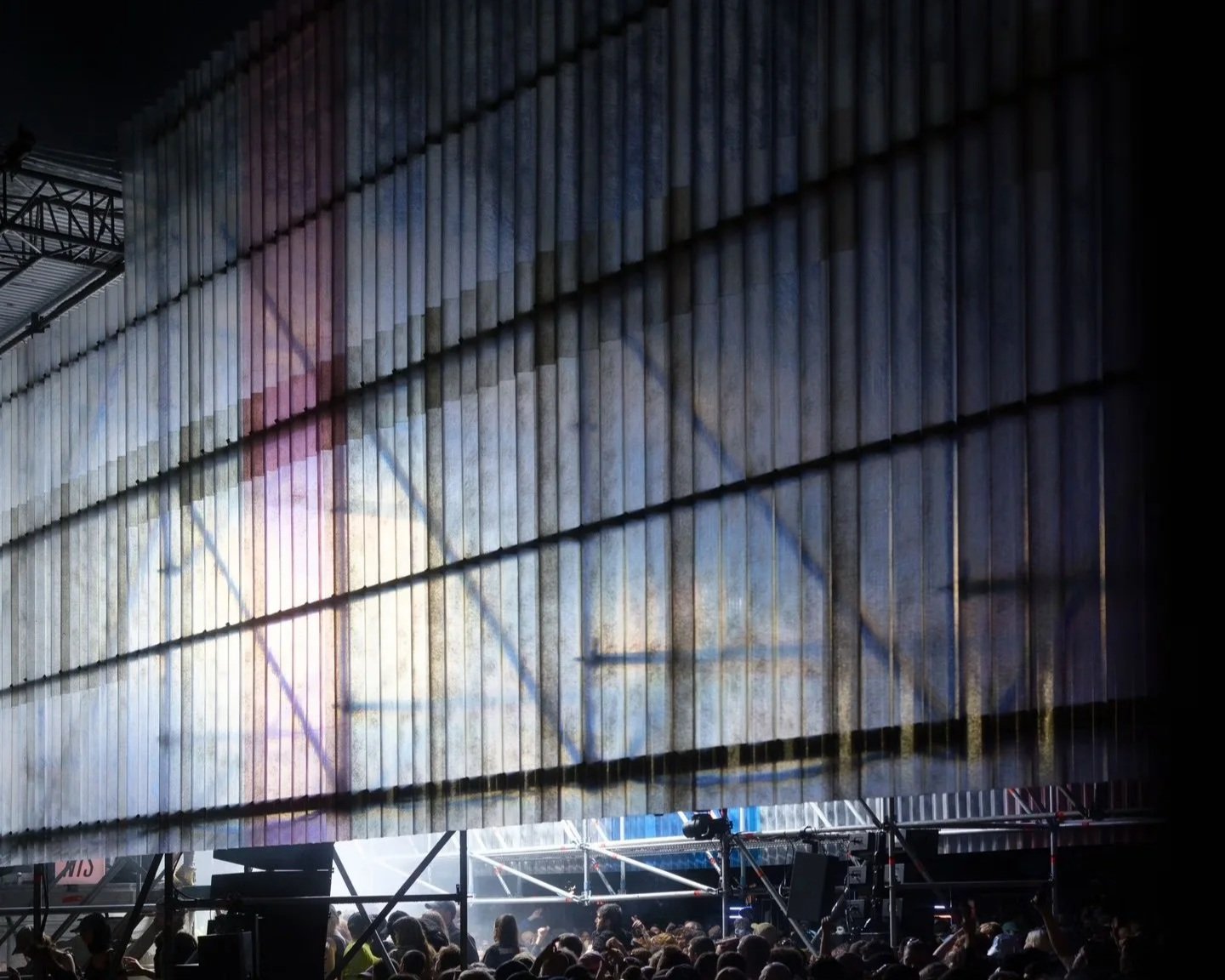
For its debut event at a Covent Garden retail unit, CAKE didn’t release the location until a few hours before and – clearly pining the loss of this kind of event – plenty turned out. “In a way, it spoke to a legacy of London’s nightlife and party culture, which has suffered due to authorities putting measures in place or the cost of keeping venues open.”
In May, a takeover of Domus’ showroom for Clerkenwell Design Week saw 300 designers per day enjoying emerging artists in a club-adjacent setting, with a series of talks raising questions such as ‘Can a club feel like a gallery opening? A product showroom? Is it OK to put music events on anywhere?’.
Despite integrated systems and purpose-built design being crucial elements for new sonic spaces, mass closures have seen CAKE Architecture embracing transient floorplates and ‘meanwhile’ venues as a way to enrich the cultural fabric of a city, without fronting the cost of a permanent base. Just one studio contributing to an exciting new era for sound-led spaces, Scott Moncrieff signs off: “What’s really important for us is that when we don’t get the ideal scenario, we still do something. We want to put on music-centric events as often as possible and encourage other individuals and collectives to do the same.”