Small but mighty: The Making of… Oko
This article first appeared in Mix Interiors #243
Photography: Courtesy of Connection by Flokk
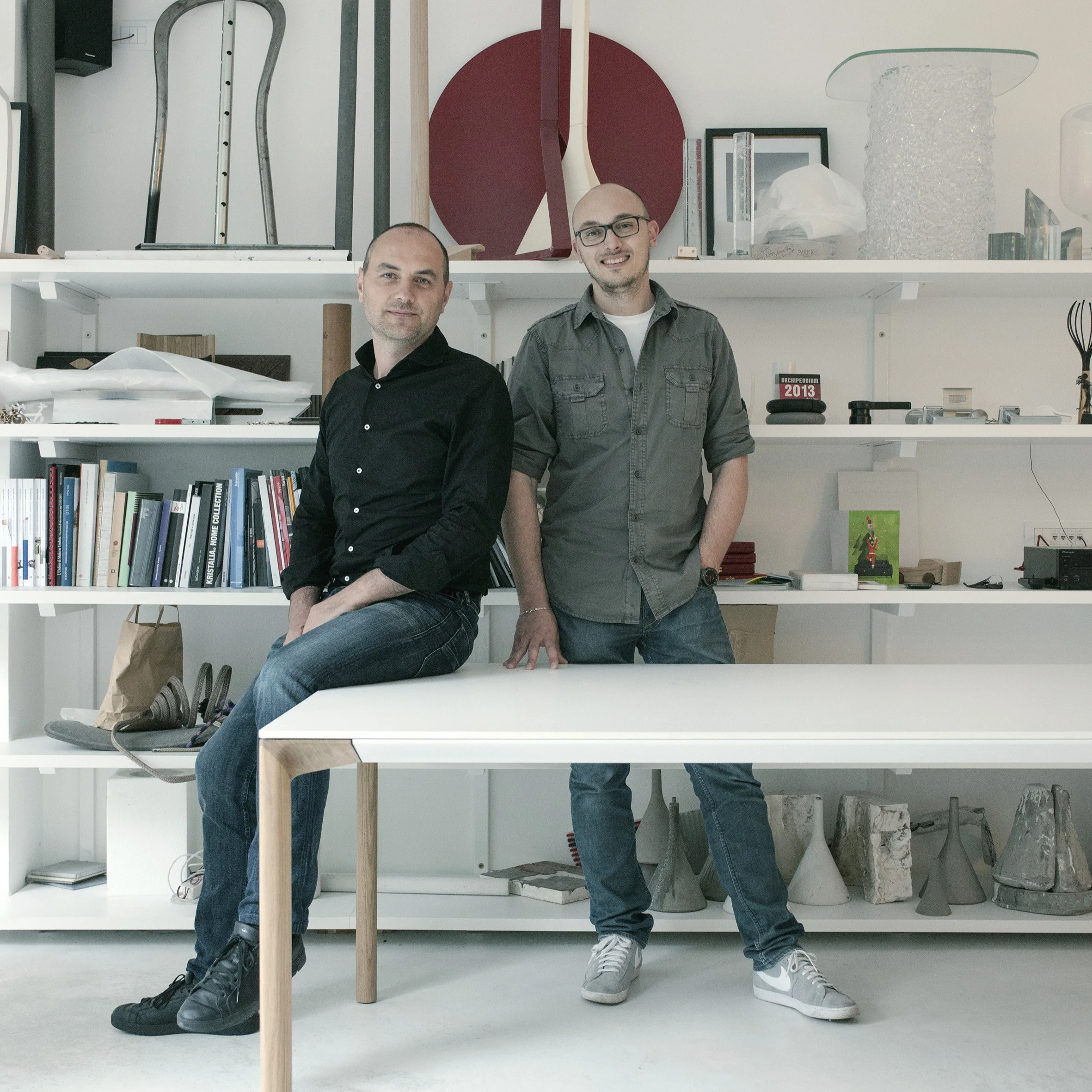
Paolo Lucidi and Luca Pevere first met in 2003, in the workshops of Italy’s famed Politecnico di Milano. Soon after, they fell into a rhythm of working collaboratively, problem solving an array of folly industrial design projects and, inadvertently, laying the foundations of what would become a very real creative venture.
Backed by a premier education, the pair returned to their home region of Friuli-Venezia Giulia in 2006, setting up LucidiPevere – the eponymous studio which went on to earn accolades from AD100, Compasso D’Oro and NeoCon for its outstanding contributions to furniture design.
Now based in the municipality of Palmanova, Udine, Lucidi muses on the gravitational pull of the town where the studio eventually landed: “This part of Italy has so many creative districts; the wooden chair district, the naval district, the knife district, as well as lots of other studios.” He adds, “It’s like a Luna Park! It is the perfect place to be as designers.”
Despite scope for expansion in the area, it has always been a conscious decision to keep operations small, occasionally taking on a student apprentice and only agreeing to an opportunity if it truly resonated. “We're very close to being a workshop,” Pevere says, almost pridefully. “Choosing not to have lots of people [working for or with the studio] preserves the freshness of the objects we design.” Over the past two decades, this being particular about creative partnerships ensured that the dilution of what makes up LucidiPevere’s essence is avoided at all costs.
However discerning, collaborations are, in fact, the lifeblood of the studio’s enduring success, having worked with a swathe of industry powerhouses in the Brianza zone, and across mainland Europe, the UK and the US. Reflecting on the exact moment the two of them initially broke into the American contract furniture circuit, Pevere explains, “It was in 2016 when we got the call from Stylex. That was our first time designing for a US market.” The studio would work closely with the heritage brand (founded in 1956 by the Golden family) for the years that ensued.
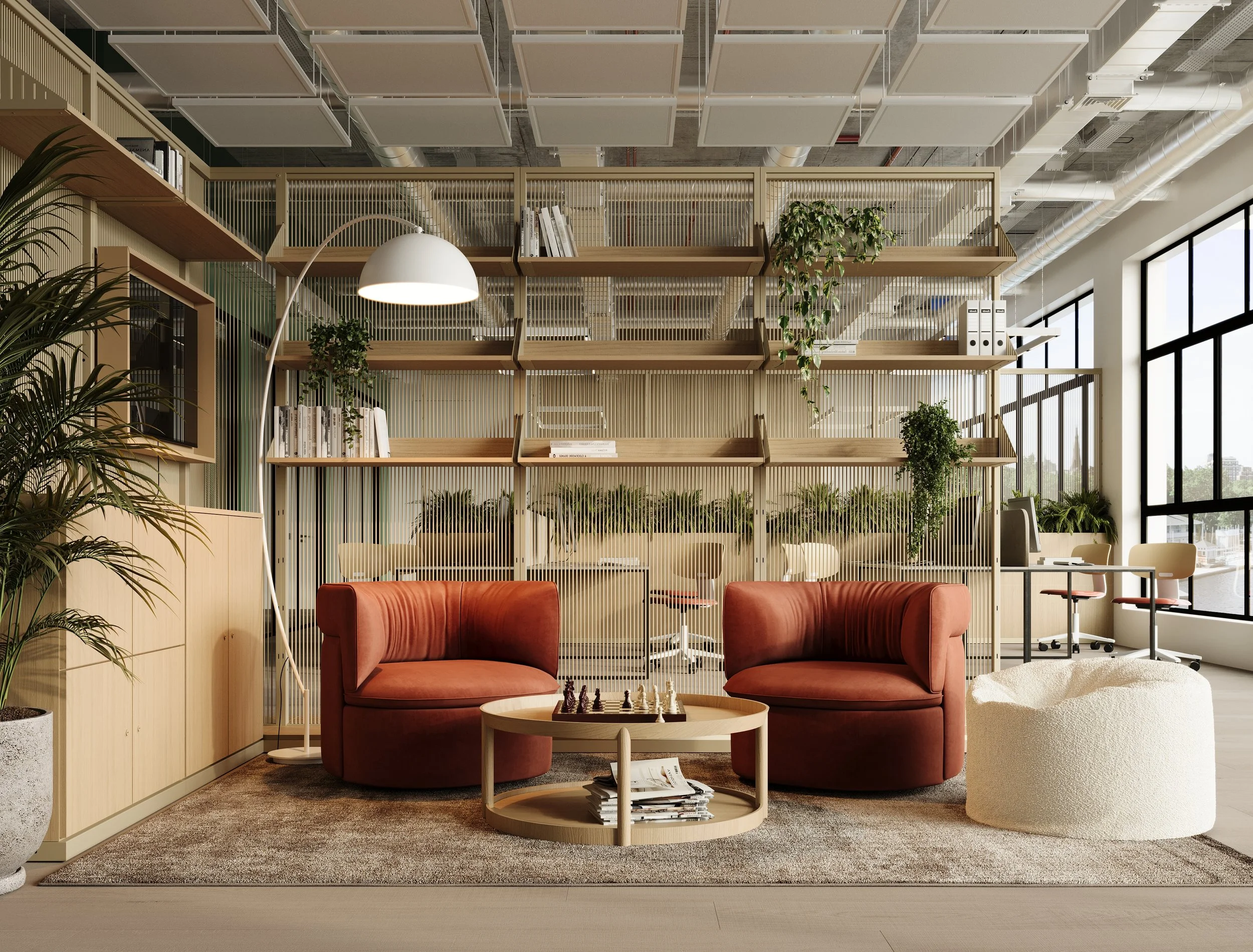
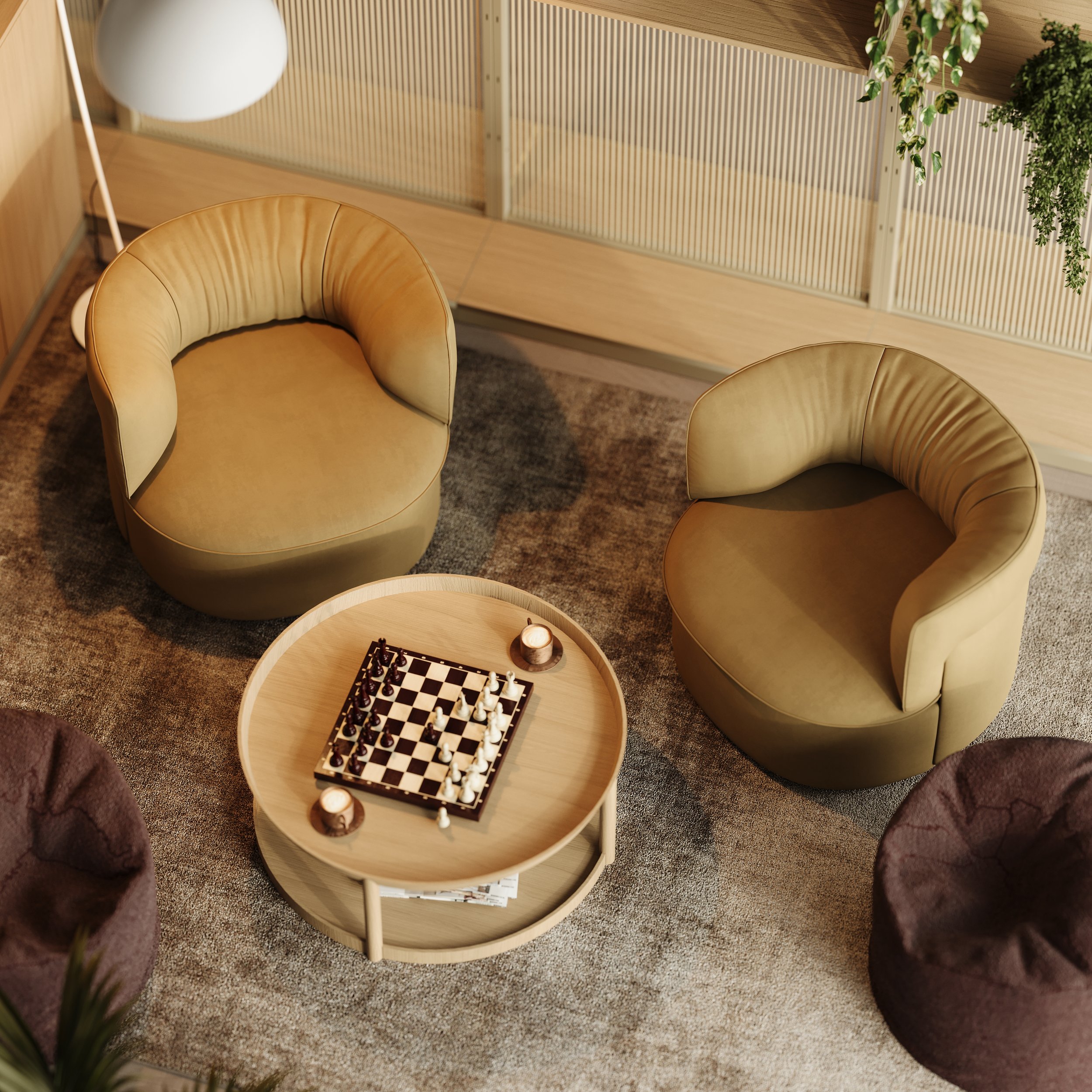
A particular standout for LucidiPevere for Stylex, Oko (2023) represented a lounge chair which reinvigorated the idea of domestic comfort in commercial settings. Squat and cylindrical in nature, Oko was intended to bring an informality to corporate breakout spaces, coworking lounges and hotel lobbies, thanks to a marriage of simple, graceful shapes and homely detailing.
Lucidi thinks back to the initial stimulus of Oko and how this formed the basis of the chair’s distinctive silhouette: “The inspiration was from Ochoko – that is a tiny ceramic cup from Japan, usually paired with a bottle of Sake. They are really small; rounded, very cute. We wanted to make an object with the same feeling and proportions. I mean, we chose this as the name, but the main goal was comfort. What we wanted to do with this project is create big comfort in a small space.”
Despite ticking all the brief’s boxes, Pevere speaks to how the design also embraced the unexpected for its then-US demographic, “We tried to break the rules of the typical American aesthetic, which is usually square, bold and massive [in scale]. So, we tried to reduce [these characteristics], to change the visual language to give a softer appearance. That was probably something that made it interesting for the company.”
Later, Flokk welcomed Stylex into its fold through a long-term acquisition completed in 2024. The intention: to strengthen the European market leader’s position across the pond, whilst expanding its pool of global design talent and expertise. Connection by Flokk – a fellow contingent of the brand – is dedicated to boosting workplace efficacy across the board. For Connection, Oko was a seating solution that accurately responded to the changing landscape of commercial design – a shift which increasingly sees relaxation and respite as essential components of productivity. “Connection by Flokk asked us to make a new development of Oko, so we revised the comfort, finishes and some of the inner details. It felt like a double climb for a unique idea,” Lucidi gushes.
Toeing the line between domestic comfort and versatility in shared spaces poses a significant set of challenges. Pevere puts Oko’s triumph (in both arenas) down to its cup-like shape and enveloping quality. “Oko is easy to integrate because it’s not square. It's possible to position it in multiple ways because there is no real orientation. You don't have one rational setting for it. You don't need it to be parallel to the walls to work,” he comments. One, two, three plus Okos can be clustered, utilised and perceived from any which angle, with options for a fixed or 360° swivel base providing further stylistic freedom for interior designers.
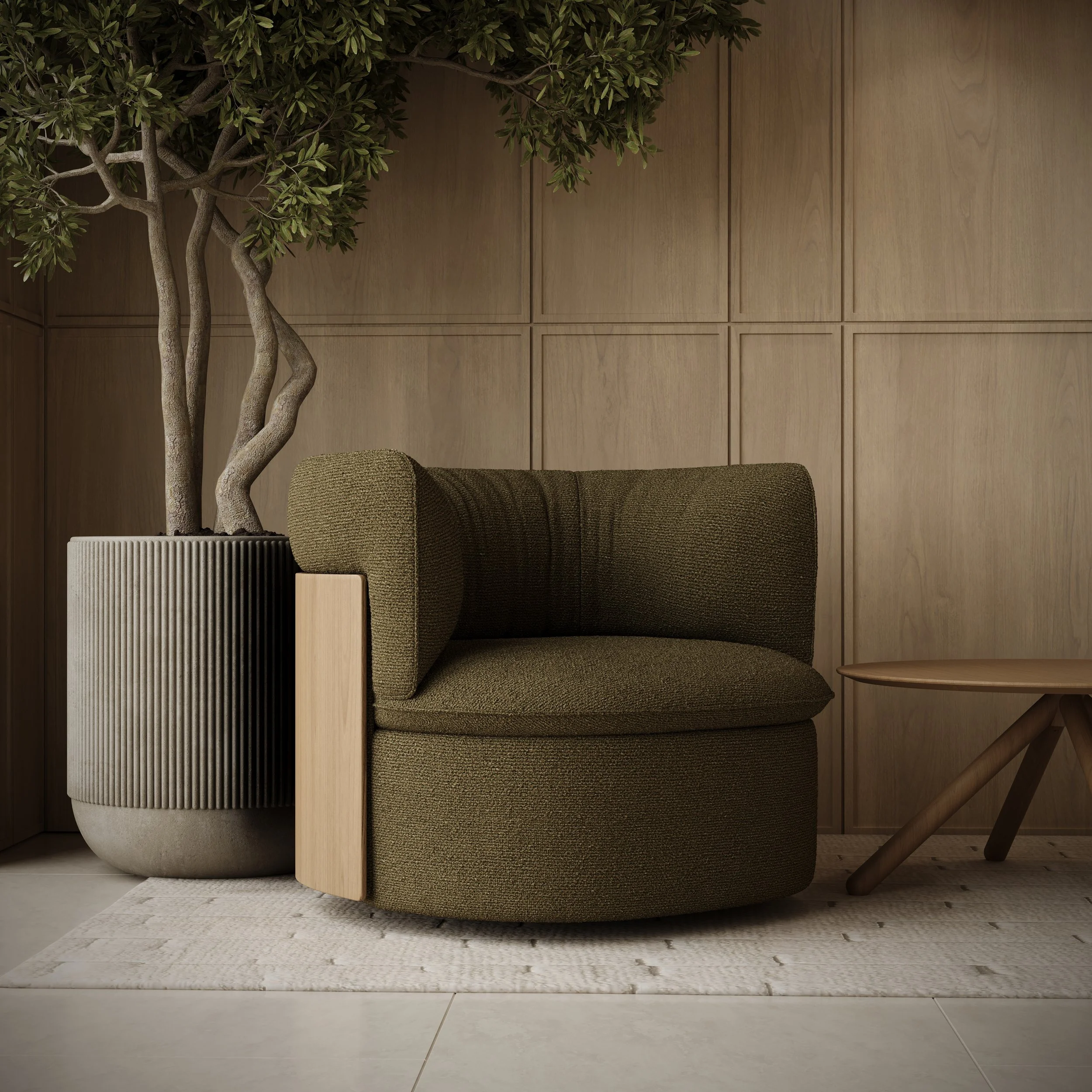
Deconstruction was another key aspect of the design, as Oko not only contends with an everchanging workplace terrain, but also the need to address climate concerns within the contract furniture sector. In response, Oko has been composed of just four elements – base plinth, back panel, base cushion and back rest – and is fixed with the help of handy elastic loops and a couple of well-placed screws. Not a drop of glue in sight.
Lucidi touches on the sustainability-led elements of Oko, but also the way in which the chair can grow and change at the same rate as business needs: “We wanted to make it simple to disassemble to waste when the chair had come to the end of its lifecycle, but also make it easy to change the upholstery and restore.”
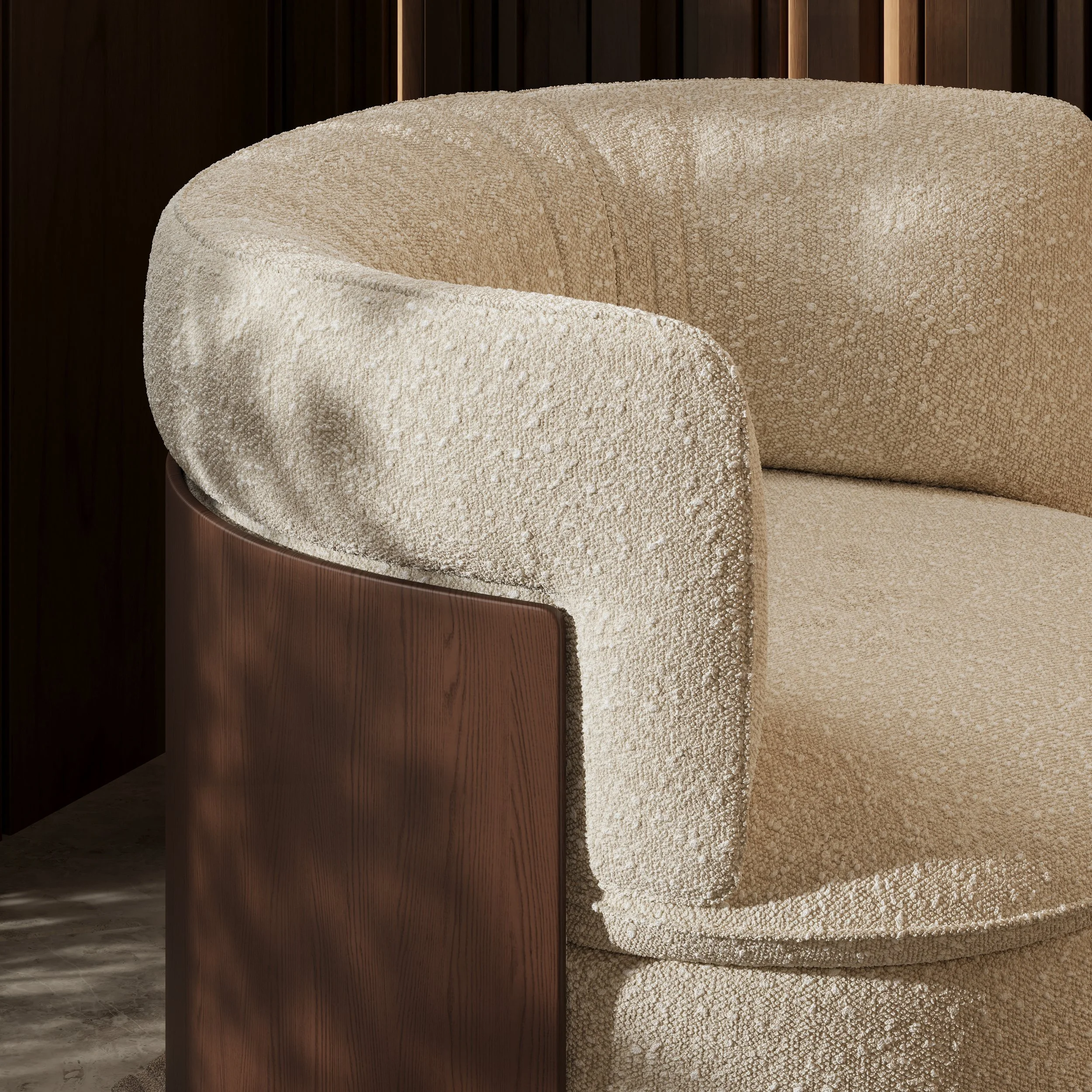
The aesthetics of the Connection by Flokk edition of Oko don’t stray much from its 2023 predecessor, LucidiPevere notes, but it is now available to purchase in a range of new ply backrest options (oak, wenge or black), aligning with a broader spectrum of colour palettes and brand identities. Fabric options by textile innovators Kvadrat, Camira, Warwick and Panaz are also new.
These upholstery choices were fundamental to the making of Oko. Intentional creases in the backrest serve to embrace the user with a familiar cosiness, acting as the pièce de resistance of what makes Oko intersectional by design. “We introduced wrinkles to a contract object which is not very common. It’s not something that the client usually wants, but in this case, we wanted Oko to take on appearance of, for example, your bedroom pillow,”Pevere explains, detailing this subtle final touch with a certain poetry – one which echoes the theme for this year’s Salone del Mobile (taking place in the city which lit the kindling of LucidiPevere 20 years before).
With ‘A Matter of Salone’ encouraging visitors to consider materiality as something imbued with narrative, meaning and storytelling quality, he also explains the studio’s principal outlook on materials more generally, “The idea with materials is to give them all a specific dignity. Luxury can also be in a ‘poor’ material, like concrete; that’s our approach. We aim to give each material a dignity in each object we’re designing.”